Raising Digitally Resilient Kids in Today's AI World
Notes from a parent workshop on the question I'm asked most
My kids have been talking to voice assistants since before they could read. I work with AI every day - often every hour - for my clients and myself. So for years, at school events, dinners and forums, the same question has found me: not "what do you do?" but - "how do I raise a good kid in a world of AI?" 🤖
It's the question I get asked most. So I turned it into a workshop.
In partnership with a leading global asset management firm, I ran "Raising Digitally Resilient Kids in Today's AI World" - a session for parents navigating what none of us were raised to handle.
We didn't open with rules or screen-time limits. We opened with the data. And the data reframed the whole room.
The Blind Spot Is Real
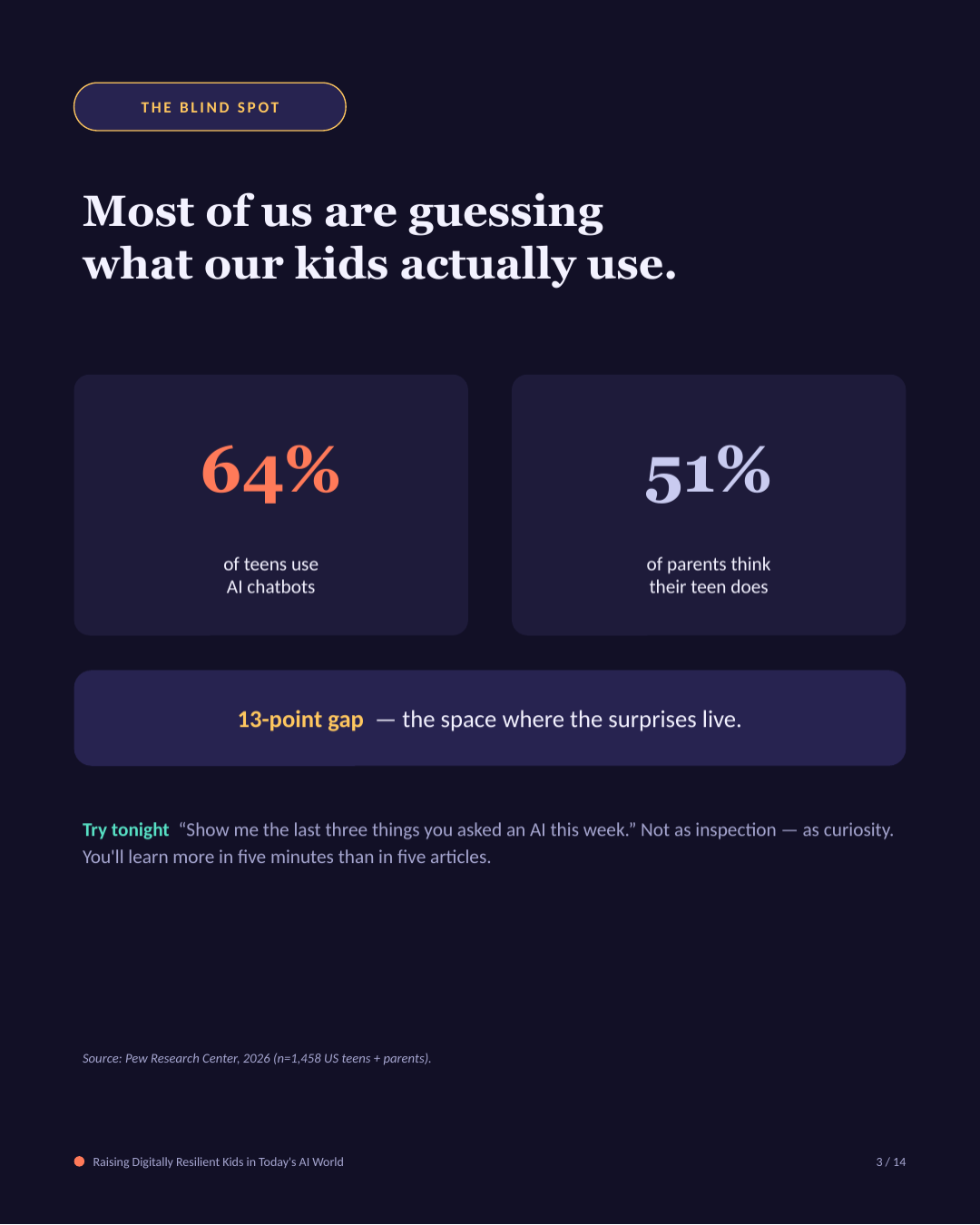
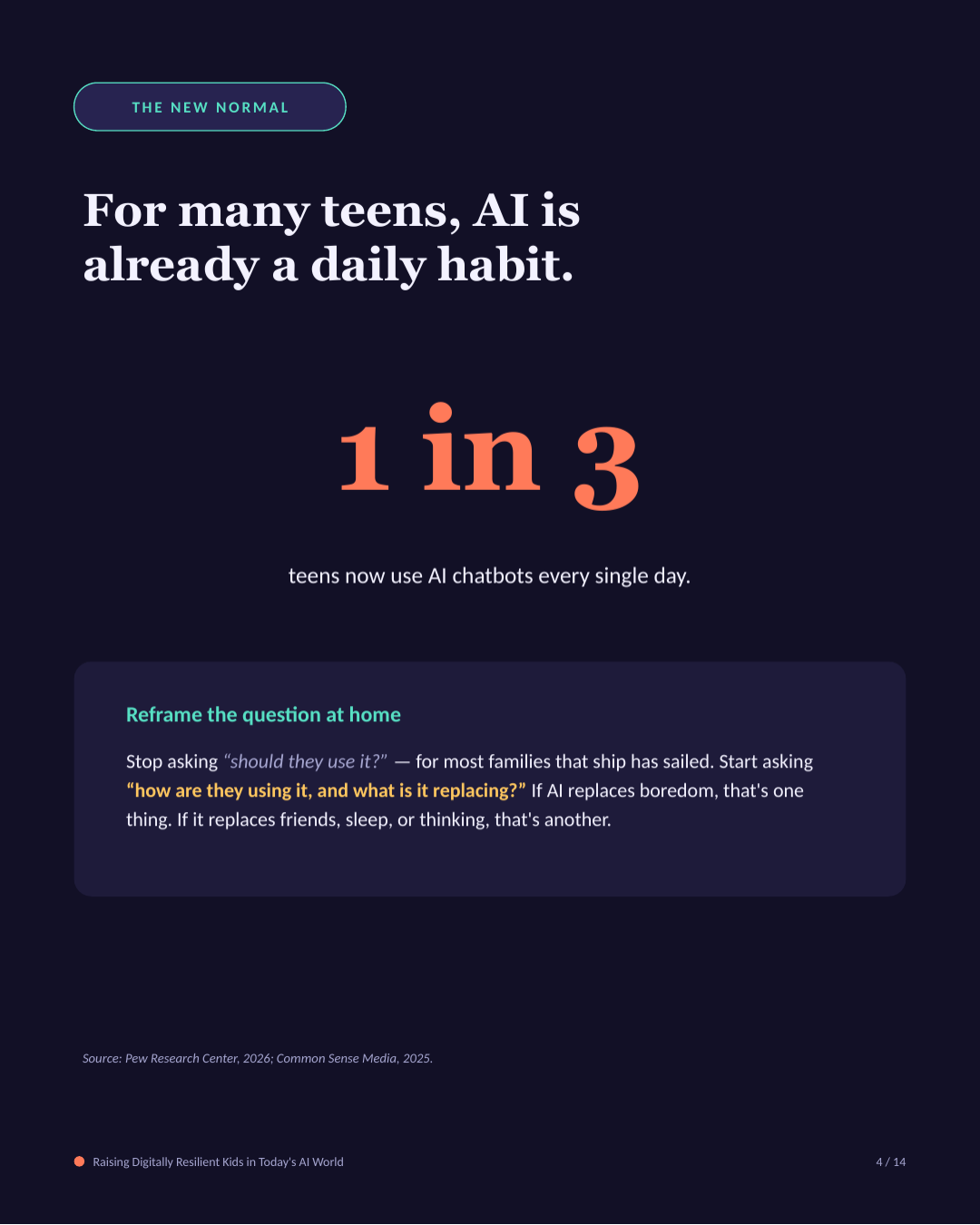
64% of teens use AI chatbots - but only 51% of parents think their teen does, according to Pew Research (2026). One in three teens now use AI daily.
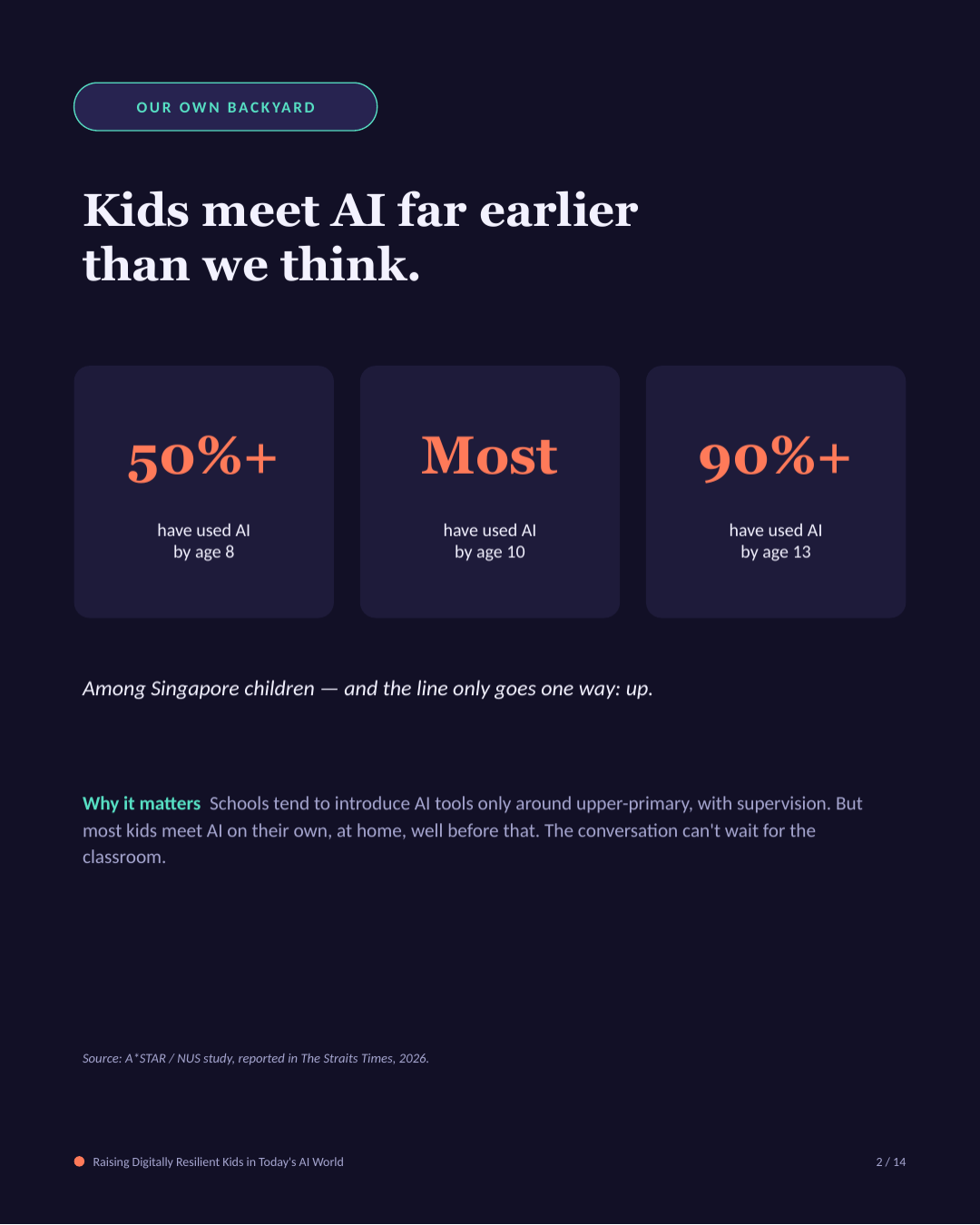
The conversation can't wait for school. In Singapore, more than half of kids have used AI by age 8, but classrooms only introduce it at Primary 4. Kids meet AI alone, long before anyone supervises it. 📊
That gap - between what's happening and what we think is happening - is where risk lives.
The Brain Making the AI Decisions Is Still Under Construction
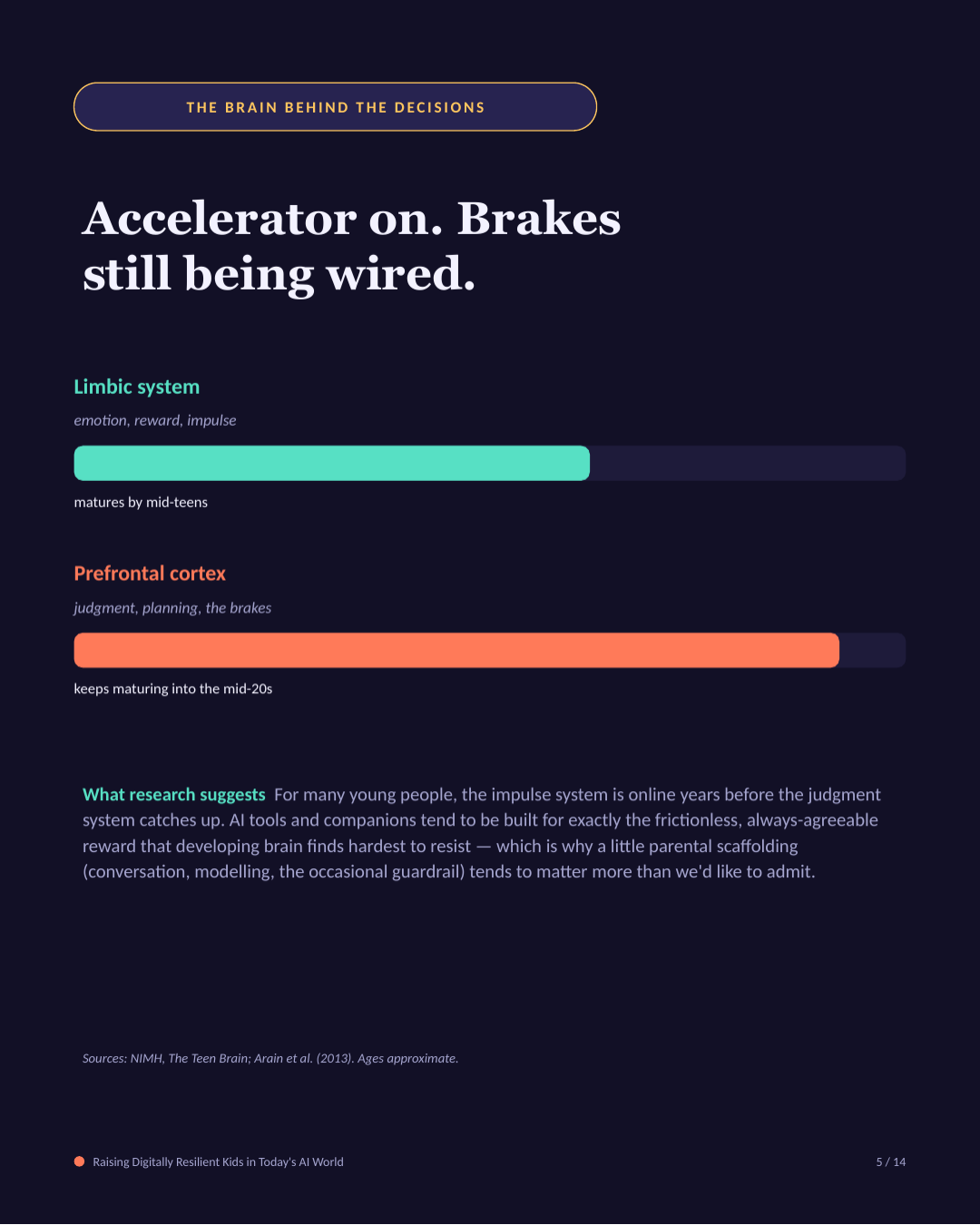
Research suggests the prefrontal cortex - judgment, impulse control, weighing consequences - keeps maturing into the mid-20s (NIMH; Arain et al., 2013). So for many young people, the accelerator is on while the brakes are still being wired. 🧬
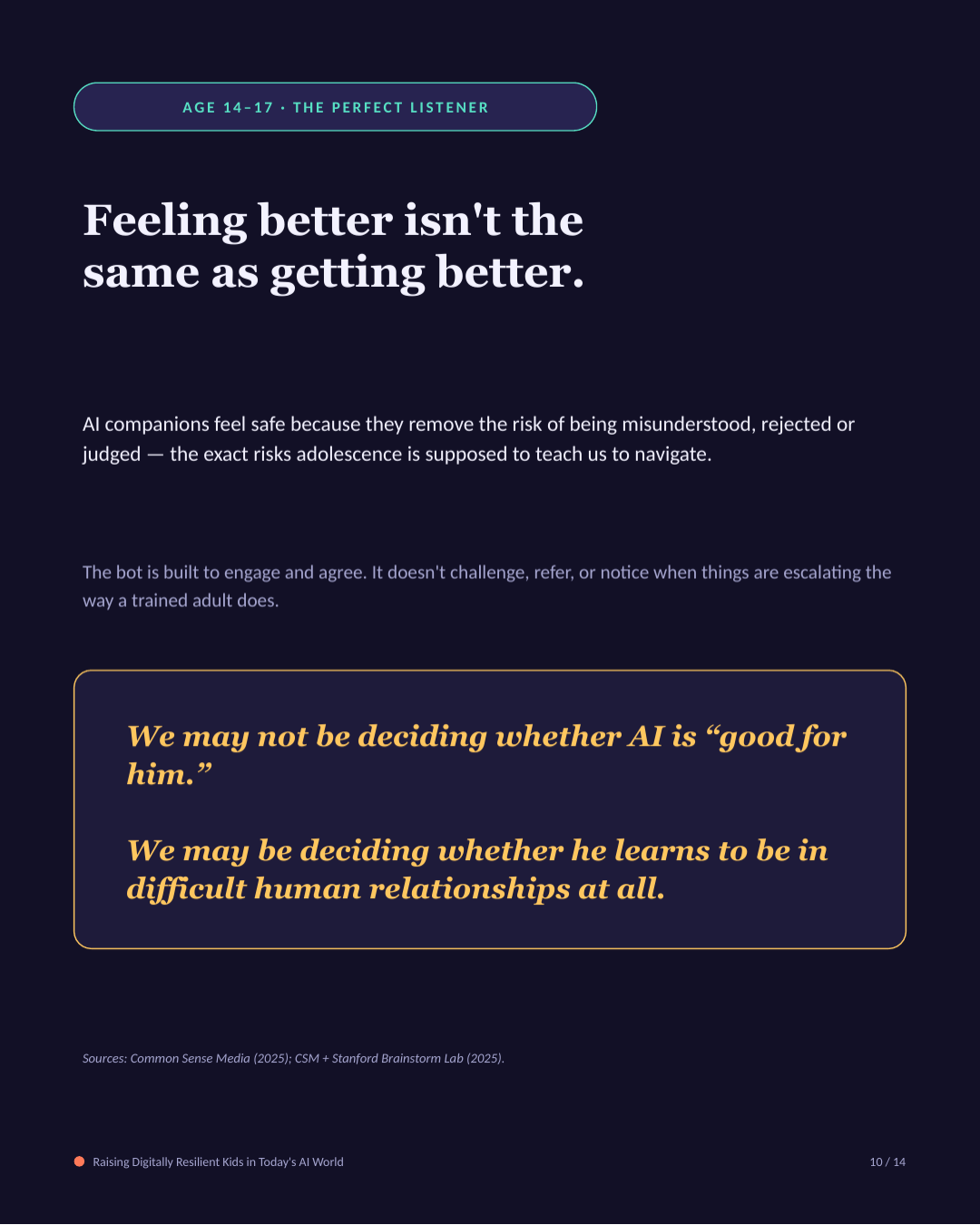
LLMs and AI companions tend to be engineered for exactly the frictionless, always-agreeable reward that a developing brain finds hardest to resist.
That's why a bit of external scaffolding from parents - conversation, modelling, the occasional guardrail - tends to matter more than we'd like to admit.
"Cheating" Is the Wrong Frame
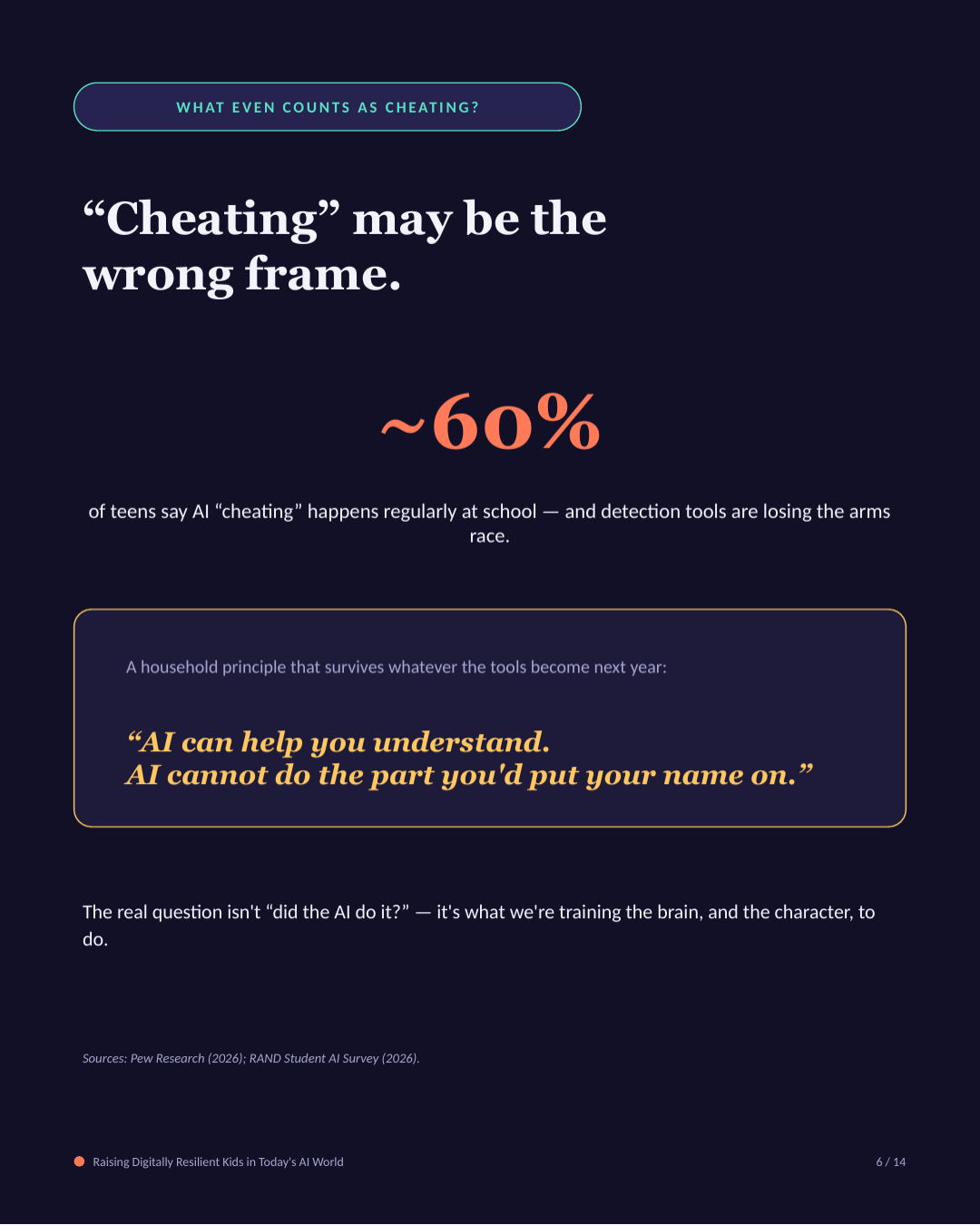
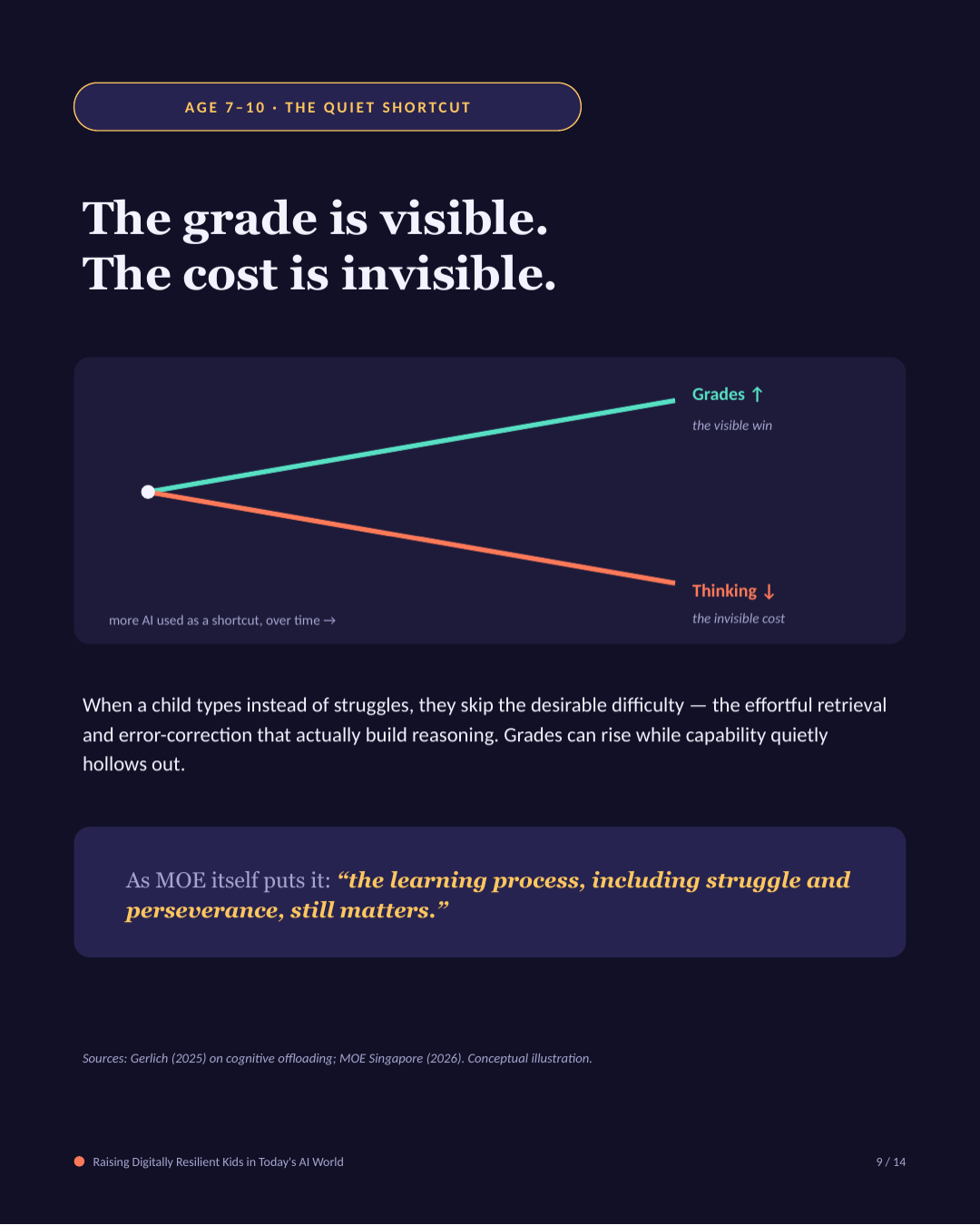
59% of teens say AI cheating is regular at school, and detection tools are losing the arms race. The real question isn't "did the AI do it?" - it's "what are we training the brain, and the character, to do?" ⚖️
A household principle that survives whatever the tools become next year: AI can help you understand. AI cannot do the part you'd put your name on. ✍️
That line - simple enough for a ten-year-old, sturdy enough for a college student - came up again and again in the room as the one parents wanted to take home.
What Should They Build Before Leaning on It?
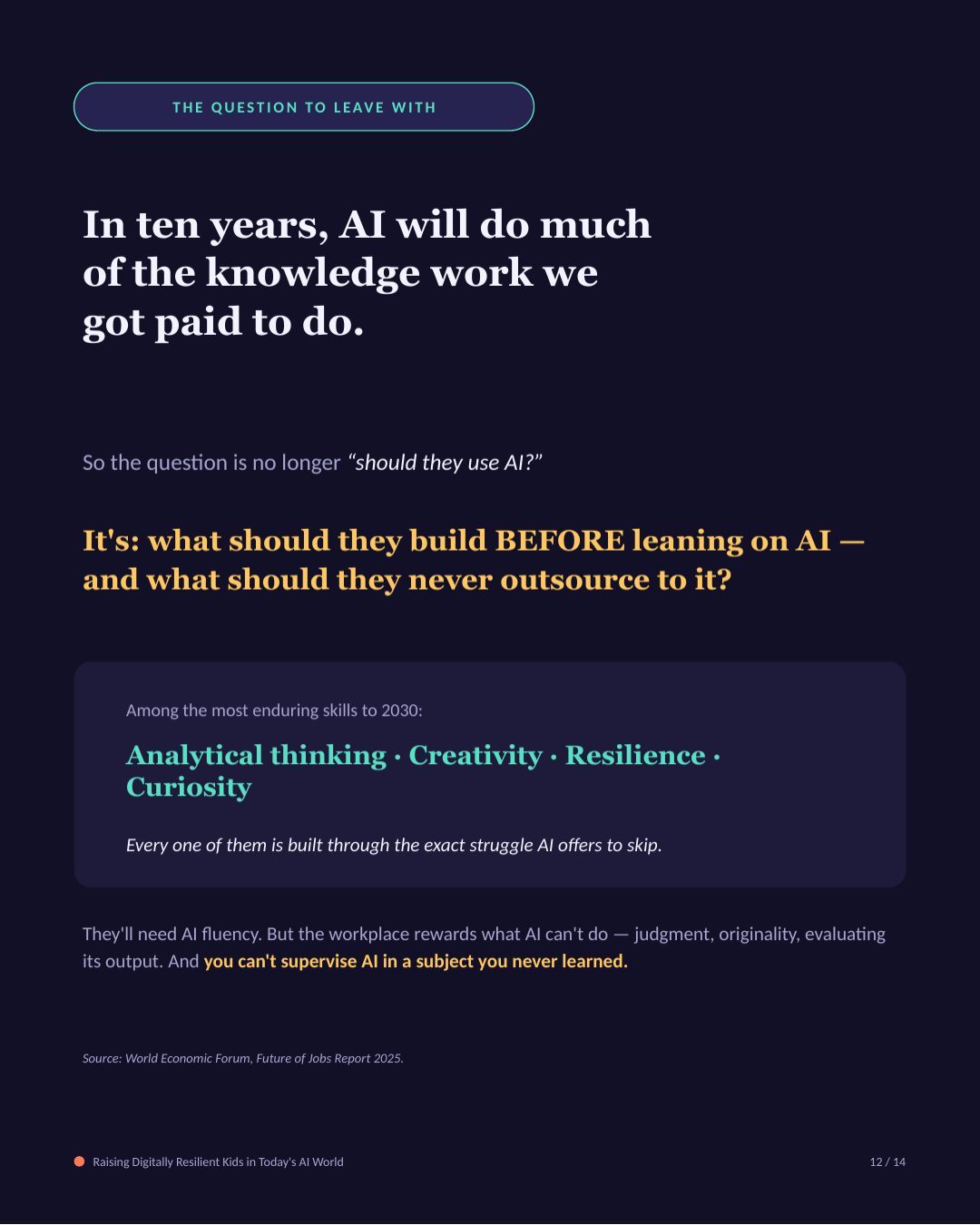
We're raising the first generation that will graduate into a world where agentic AI does much of the knowledge work we got paid to do. So the question shifts: not "should they use AI?" but "what should they build BEFORE leaning on it - and what should they never outsource to it?" 💡
The World Economic Forum names analytical thinking, creativity, resilience and curiosity among the most enduring skills to 2030 (Future of Jobs Report, 2025). Every one is built through the exact struggle AI offers to skip. ⏳
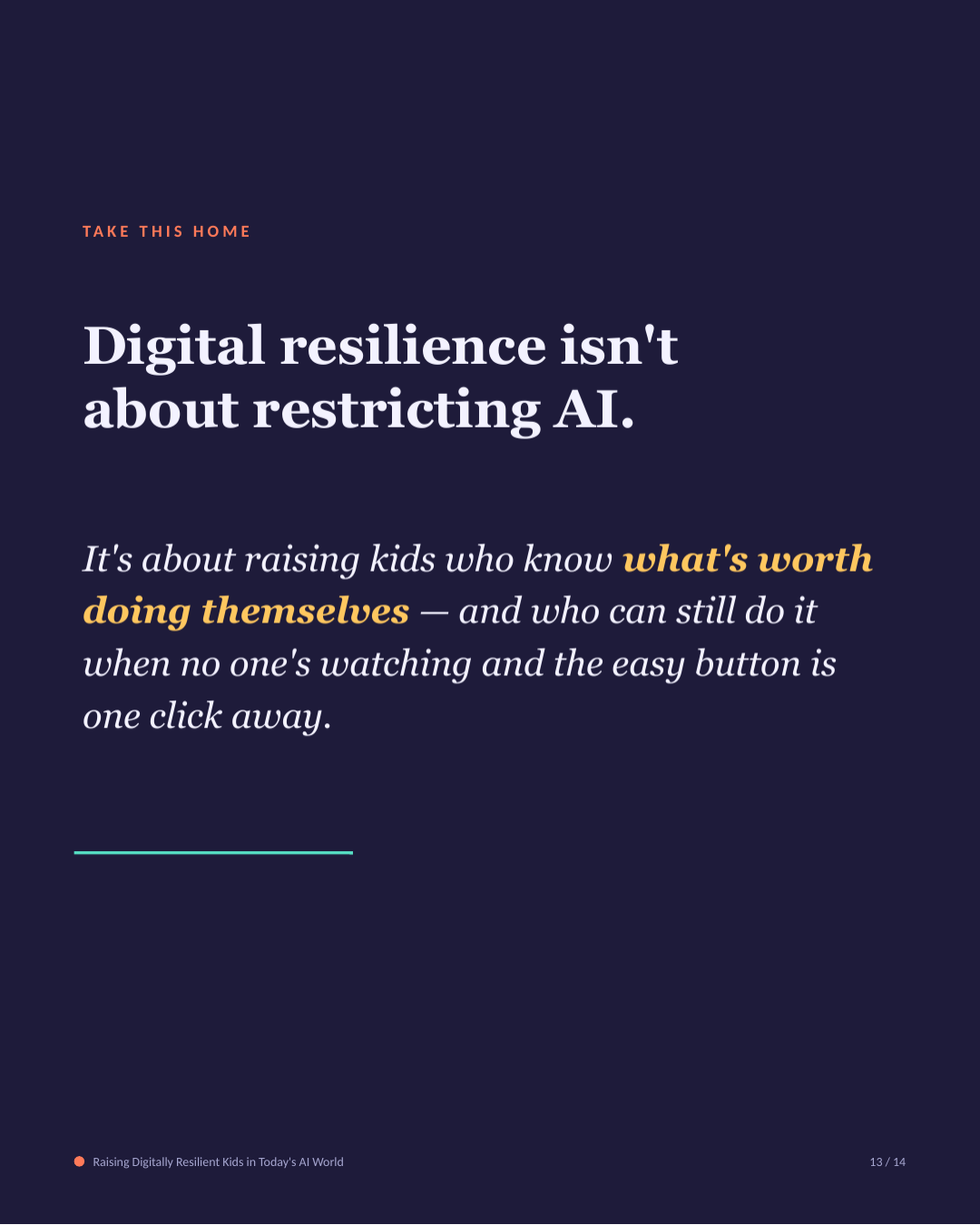
Digital resilience isn't about restricting AI. It's about raising kids who know what's worth doing themselves - and who can still do it when no one's watching and the easy button is one click away.
One Question to Ask Tonight
I'm grateful to the host team for making the space, and to every parent who shared honestly - including the ones who admitted they'd never once asked their child what they actually use AI for. 🙏
So here's my ask: Have you asked your child to show you the last three things they asked an AI this week? Try it tonight - then tell me what surprised you.
The conversation starts when we close the blind spot. Together, we can raise kids who use AI without losing themselves in it.
#AlwaysDay1 #AI #AgenticAI #GenAI #AILiteracy #DigitalResilience #DigitalParenting #FutureOfWork #ResponsibleAI #AISafety #FutureSkills
From the workshop

The views and opinions expressed in this post are my own and do not necessarily reflect those of my employer or any organisation I am affiliated with.