Building Clinically-Validated Conversational Agents for Healthcare
Three weeks helping healthcare organizations reimagine patient access
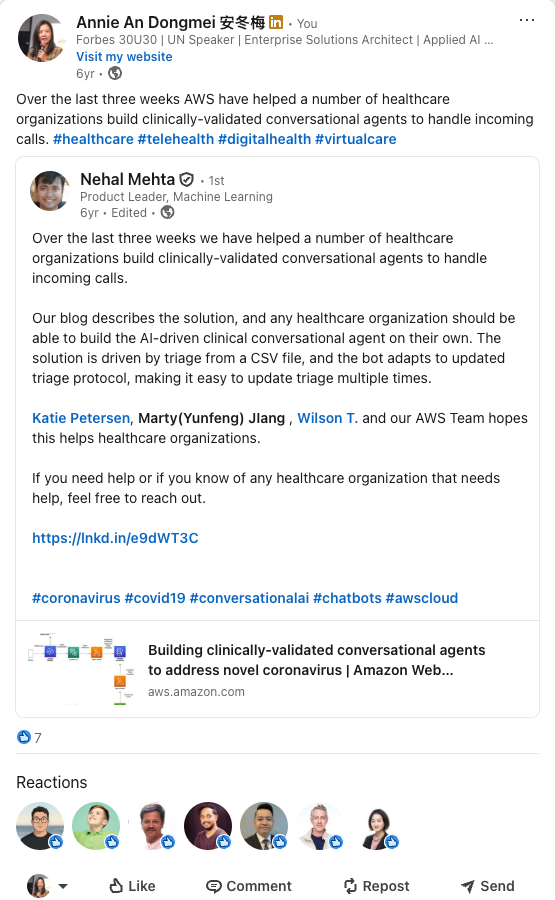
Over the last three weeks, I've had the privilege of working with AWS teams to help a number of healthcare organizations build clinically-validated conversational agents to handle incoming patient calls. 🏥
It's been intense, rewarding work - the kind that reminds me why I'm so passionate about human-first AI. These aren't theoretical use cases. These are real care teams, stretched thin, trying to meet patients where they are while maintaining the quality and safety that healthcare demands.
Meeting patients where they are
For many patients, a phone call is still the first point of contact with their care team. Whether it's scheduling an appointment, triaging symptoms, or answering questions about medication, that initial conversation sets the tone for the entire care experience.
The challenge? Care teams are stretched thin. Wait times grow. Patients get frustrated. And administrative burden keeps clinicians away from the work that matters most.
Here's something that surprised me: about 1 in 6 US adults are already using AI chatbots at least once a month for health information. Patients are seeking these tools out. The question isn't whether AI will be part of healthcare - it's whether we'll build it responsibly.
Clinically-validated, human-first agents
These aren't generic chatbots. The conversational agents we've been building are clinically validated - designed to handle real patient interactions with the rigor and safety healthcare demands.
They can triage incoming calls, answer common questions, route urgent cases to the right care team, and free up human clinicians to focus on complex, high-touch care. The AI handles the routine. The humans handle the nuance.
That's the kind of agentic AI architecture that amplifies human judgment, rather than trying to replace it.
The benefits are real and well-documented. Research shows that clinicians highlight AI chatbots' ability to administer follow-up tasks, provide multilingual support, enhance accessibility and affordability, and increase patient engagement. These aren't just efficiency gains - they're equity gains.
What makes this work
A few things have been critical to getting these agents into production quickly:
🔹 Clinical validation from day one - working hand-in-hand with care teams to ensure safety, accuracy, and compliance.
🔹 Human-in-the-loop design - the agent knows when to escalate, and clinicians stay in control of the care pathway.
🔹 Rapid iteration - building in weeks, not months, because healthcare organizations need solutions that move at the speed of patient need.
🔹 HIPAA-eligible infrastructure - leveraging AWS services like Amazon Bedrock, Amazon Transcribe Medical, and Amazon Comprehend Medical that are purpose-built for healthcare's regulatory requirements.
Building with eyes wide open
I want to be clear: this work requires humility. The same research that documents the benefits also highlights real risks - lack of regulation, data and privacy concerns, limited understanding of patient backgrounds, potential for over-reliance, incorrect recommendations, and inability to detect subtle cues.
These aren't hypothetical concerns. They're the guardrails we build into every conversation flow, every escalation pathway, every training dataset. Clinical validation isn't a checkbox - it's an ongoing commitment.
That's why human-in-the-loop design isn't optional. The agent must know its limits. It must know when a patient's tone shifts, when a question requires clinical judgment, when to hand off to a human who can read between the lines.
AI that serves care teams and patients
I've said it before: the best AI doesn't replace human expertise - it creates space for it. When a conversational agent can handle routine triage and scheduling, a nurse can spend more time with the patient who needs reassurance. A doctor can focus on the diagnosis that requires years of training and intuition.
That's the future of healthcare AI I want to help build. One where technology meets patients where they are, and gives care teams the room to do their best work.
The organizations I've been working with are moving fast, but they're moving thoughtfully. They're asking the hard questions. They're involving clinicians from day one. They're building systems that respect both the promise and the responsibility of AI in healthcare.
More to come as these systems go live. 🙏
#AlwaysDay1 #Healthcare #Telehealth #DigitalHealth #VirtualCare #AgenticAI
The views and opinions expressed in this post are my own and do not necessarily reflect those of my employer or any organisation I am affiliated with.